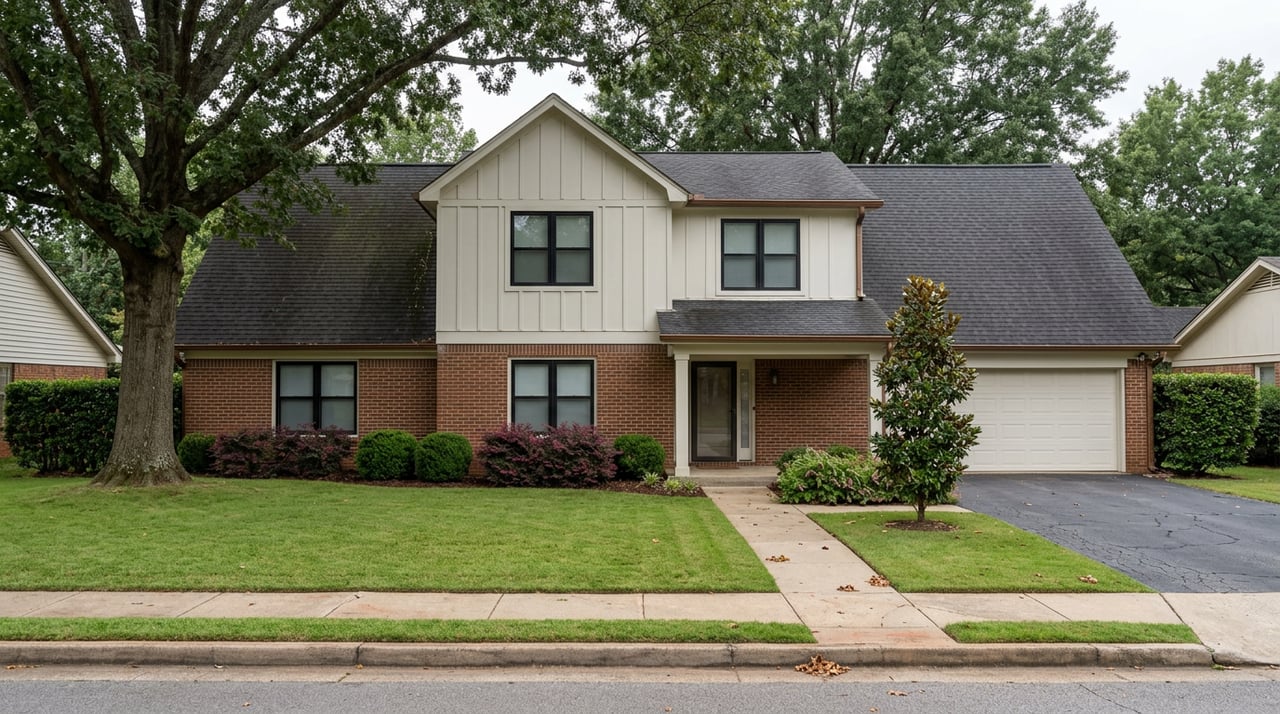
The listing looks clean. Three bedrooms, no HOA, and according to short-term rental market data, a Lawrenceville property like this one earns a median $28,665 a year as an Airbnb, with top performers pulling in $43,817 or more. Before you run those numbers into an offer, the question that actually decides whether you can operate that way has nothing to do with occupancy rates. It has to do with which side of a jurisdictional line the parcel sits on, and whether you plan to live there.
Most of the recent headlines about short-term rentals in Gwinnett County describe a new county ordinance. That ordinance matters, but if your target property sits inside Lawrenceville city limits, it is not the rule governing you. The city already has its own, and it is tighter than what the county just adopted.
The Ordinance Making News Isn't The One That Applies Inside The City
On April 14, 2026, the Gwinnett County Board of Commissioners voted 5-0 to write a new Short-Term Rental Ordinance into Article V of Chapter 74 of the county code. The vote is real and the rule is coming, but the county built in a full year of runway before any of it takes effect: the ordinance doesn't bind anyone until April 14, 2027.
Once it does, a short-term rental in unincorporated Gwinnett will need an annual license, a local agent who lives in Gwinnett County or an adjacent county, and an interior property maintenance inspection every two years. The county is contracting the licensing program out to a third-party vendor rather than running it in-house, and the sealed-bid process for that contract closed May 21, 2026. As of the county's own July 2026 update, no vendor award and no fee number had yet been published. Until that award is announced and a fee schedule follows, an unincorporated Gwinnett host has nothing to apply for and nothing to pay.
That timeline applies to unincorporated Gwinnett County only. A property inside an incorporated city, including Lawrenceville, answers to that city's own zoning and business licensing authority, not to the county's Unified Development Ordinance. The county's new rule is the story everyone is reading. It is also, for a Lawrenceville buyer, close to irrelevant.
What's Already Binding You Inside City Limits
Lawrenceville does not need to wait until 2027, because it already regulates short-term rentals directly. According to CityRuleLookup, the city requires every operator to obtain an annual STR license through its Planning and Development Department, administered through the city's Licensing, Permits, and Plans Portal. The license costs $100 a year, and it comes with three conditions that don't show up in any county-level summary: a primary-residence requirement, a two-property cap per owner, and a mandatory 500-foot separation between any two short-term rentals.
Here's how the two frameworks stack up as of today:
| Requirement | Lawrenceville city limits (now) | Unincorporated Gwinnett County (now) | Unincorporated Gwinnett County (from April 14, 2027) |
|---|---|---|---|
| Annual license | Yes, $100, through the city's LPP Portal | None currently required | Required, fee to be set by the licensed vendor |
| Owner-occupancy | Required | Not addressed | Not addressed in the adopted ordinance |
| Properties per owner | Capped at two | Not addressed | Not addressed in the adopted ordinance |
| Distance between STRs | 500 feet minimum | Not addressed | Not addressed in the adopted ordinance |
| Local agent requirement | Not specified | Not applicable | Required, must reside in Gwinnett or an adjacent county |
| Recurring inspection | Not explicitly required, though the property must be kept safe and sanitary | None | Interior inspection every two years |
Read the two right-hand columns and the picture becomes clear. Gwinnett's incoming ordinance is built around licensing, a local point of contact, and inspection cadence. It says nothing about owner-occupancy, property caps, or spacing between rentals, at least not in what the county has published so far. Lawrenceville's ordinance is built around exactly those three things, and it has been in force well before the county acted at all.
The Requirement That Actually Changes Your Math
Of the three city-specific rules, the primary-residence requirement is the one that changes what kind of buyer this market is even open to. A two-property cap and a 500-foot buffer are workable constraints for someone who intends to live in one of their Lawrenceville homes and rent the other. They are not workable for the model a lot of out-of-state or portfolio investors have in mind when they see that $28,665 median figure: buy a house, never live in it, run it purely as a rental.
If the license requires the property to be your primary residence, a non-owner-occupied investment purchase inside city limits does not qualify for a license under the terms as written. You can find that pattern elsewhere in metro Atlanta. DeKalb County's own STR ordinance, which Awning says reached full enforcement in early 2026, takes a different approach built around registration and operational standards rather than occupancy, which is part of why investors comparing DeKalb and Gwinnett suburbs often find the rules don't map cleanly from one county to the next, let alone from a county to the city sitting inside it.
None of this means Lawrenceville is closed to short-term rental income. It means the strategy has to fit the rule. An owner who lives in the home and rents a room, an accessory space, or the whole property during travel has a path. A buyer looking for a pure investment property to run as an unhosted rental should look at what's actually available in unincorporated Gwinnett before the 2027 ordinance narrows that window, or plan the purchase around occupying the Lawrenceville property as a primary residence.
The State Layer That Applies No Matter Which Side Of The Line You're On
One more requirement sits above both the city and county rules, and it applies regardless of where your property sits. Senate Bill 570 took effect July 1, 2026, and it requires every operator of a short-term rental property in Georgia to complete human-trafficking-awareness training within 60 days of their first booking, repeat it annually, and keep records for three years after they stop hosting. The penalties for skipping it run from $500 to $2,000 depending on how many times an operator has been cited. It's a new enough requirement that plenty of current hosts haven't caught up to it, and that gap is exactly the kind of thing local code enforcement tends to notice first.
What This Means If You're Comparing Addresses
If you're deciding between a property inside Lawrenceville and one just outside the city limits, the comparison isn't just about price per square foot. It's about which set of rules attaches to the parcel and whether your intended use fits them.
Before you write an offer on anything you plan to run as a short-term rental, confirm two things directly with the relevant planning department: whether the parcel sits inside an incorporated city or in unincorporated county land, and whether the license type available to you matches how you intend to use the property. A seller's trailing twelve months of booking revenue tells you what the property has earned. It doesn't tell you whether you, as the next owner, qualify for the same license under the same terms. Ordinance summaries change, and the fastest way to get an answer that holds up is a direct conversation with the city's Planning and Development Department rather than a secondhand guide, including this one.
Frequently Asked Questions
Does the fact that Gwinnett County's ordinance doesn't take effect until 2027 mean unincorporated properties are unregulated until then? Not entirely. The specific license, local-agent, and inspection requirements start April 14, 2027, but the property still sits under general county zoning and nuisance rules in the meantime. What's absent right now is the licensing structure itself.
If I own a non-owner-occupied short-term rental inside Lawrenceville today, does the city's rule affect me retroactively? The available ordinance summary doesn't describe a grandfather clause for existing operators. If this applies to you, confirm your status directly with Lawrenceville's Planning and Development Department rather than assuming continuity.
Does Gwinnett County's 2027 ordinance apply to any property inside Lawrenceville? No. Incorporated cities set their own zoning and licensing authority independent of the county's Unified Development Ordinance. Lawrenceville's existing rule is the one that governs a parcel inside city limits.
Does the SB 570 training requirement apply even if my property is fully compliant with local rules? Yes. It's a statewide requirement that sits above local ordinances and applies to every short-term rental operator in Georgia, regardless of city or county rules.
Short-term rental math looks straightforward until you get to the paperwork, and the paperwork is where a deal either works or doesn't. If you're weighing a Lawrenceville property against something just outside the city line, or you want a second opinion on how a specific parcel's zoning affects your plans before you write an offer, Mara Santos can walk through what a given address actually allows. Schedule a consultation before you commit to a number that depends on rules you haven't confirmed yet.
This article is general information, not legal, tax or financial advice. Consult a qualified professional about your situation.
